
 Svenska
 Nederlands
Cart
Your cart is empty, but doesn't have to be..
Your cart is empty, but doesn't have to be..
Lovebox Sweden |10/11, 2023
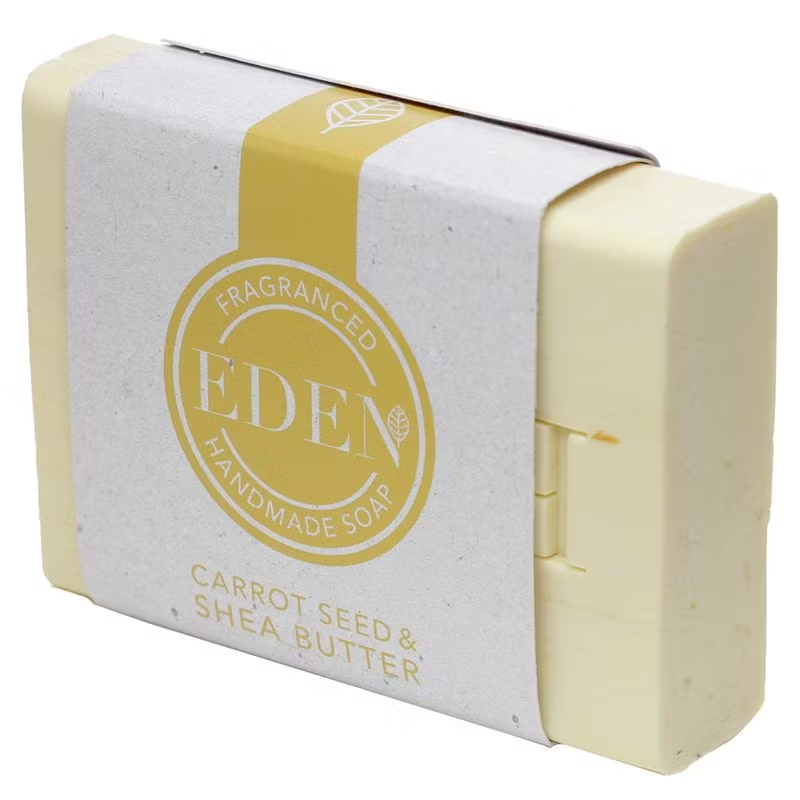
At Lovebox Sweden, we are actually advocates of handmade solid soaps. But it's not without reason. We'll soon tell you exactly why. And we won't wrap it up very nicely, but get straight to the point. Because we think it's a bit crazy how we've almost abandoned solid soap completely in favor of liquid soap. Really crazy.
Liquid soap is a new invention! It wasn't until the 1990s that liquid soap began to creep into our homes. But solid soaps have been manufactured since the early 19th century - when hygiene in general began to become something people cared about. For centuries, solid soaps have been manufactured in different colors, shapes and scents and it has been a part of our history, but now it has unfortunately been replaced by liquid soap in every home.
Liquid soap runs out faster! That's right. A solid soap that is allowed to drain between uses, for example on a soap dish, lasts much longer than liquid soap. When we take out the liquid soap, we also usually take a little too much to be safe. While the amount of solid soap in our hands is just right. So.. are we starting to understand a little now why liquid soap even came into being and was marketed widely? If not.. read on.
Solid soap does NOT spread bacteria! Here we actually have research to lean on. A common belief is that since others have touched the solid soap between washings, it will be more disgusting and spread bacteria and diseases rather than counteracting this. You can read more here if you want it in detail, but in short, it was found in that study (there have been similar studies before that showed the same results) that when you added 70 (!!) times more of two different types of bacteria to a solid soap than what can normally end up on a solid soap when used, none of the 16 test subjects had any of those bacteria left on their hands after handwashing with that soap. It probably can't get any clearer than this. So the order when it comes to cleanliness is: Gold place: Solid soap, Silver place: Liquid soap, Bronze place (if it even deserves to be here): Foam soap. Foam soap is the worst because when washing hands, you also have to use mechanical rubbing to get bacteria and viruses to loosen and then rinse them away with water, and when using foam soap, you don't work up a lather because it's already there.
Solid soaps reduce plastic use! Most households today use liquid soap in plastic packaging. According to Statistics Sweden, there are currently nearly 5 million households in Sweden. 2 million of these are single-person households. For the sake of simplicity, imagine that right now there may be 5 million plastic packages of liquid soap in their homes. And we'll make it simple and say that these last an average of 3 weeks (less for some, more for others, for sure). In a year, there are about 17 3-week periods. So 17 x 5 million is 85 million. 85 million plastic packages for liquid soap per year could be reduced by at least half, if we don't have the ambition to remove it completely when it comes to soap. Oh my God!
Liquid soap destroys our nature more than solid soap! Many liquid soaps do not even contain any natural oil of any kind but fat-dissolving chemicals that are very drying to the skin and negatively affect our waters. Not to mention more additives that are often added to get various scents and colors. Liquid soaps that are made with real oil in the right way are often expensive, up to 150-200 kronor per package. Because that's what it costs to manufacture. Our solid handmade soaps, however, are cheap and last a long time.
So.. we hope that more people can now really think about their soap purchases. A solid handmade soap is therefore better for your health, the environment and actually also your wallet over time. It is also a way to honor soap culture and the craftsmanship that real soap actually is. Good, right? :)